R.A.W. is thrilled to join Kultivator for Tell the Field that She Wants to Be A Meadow (2025-2027)
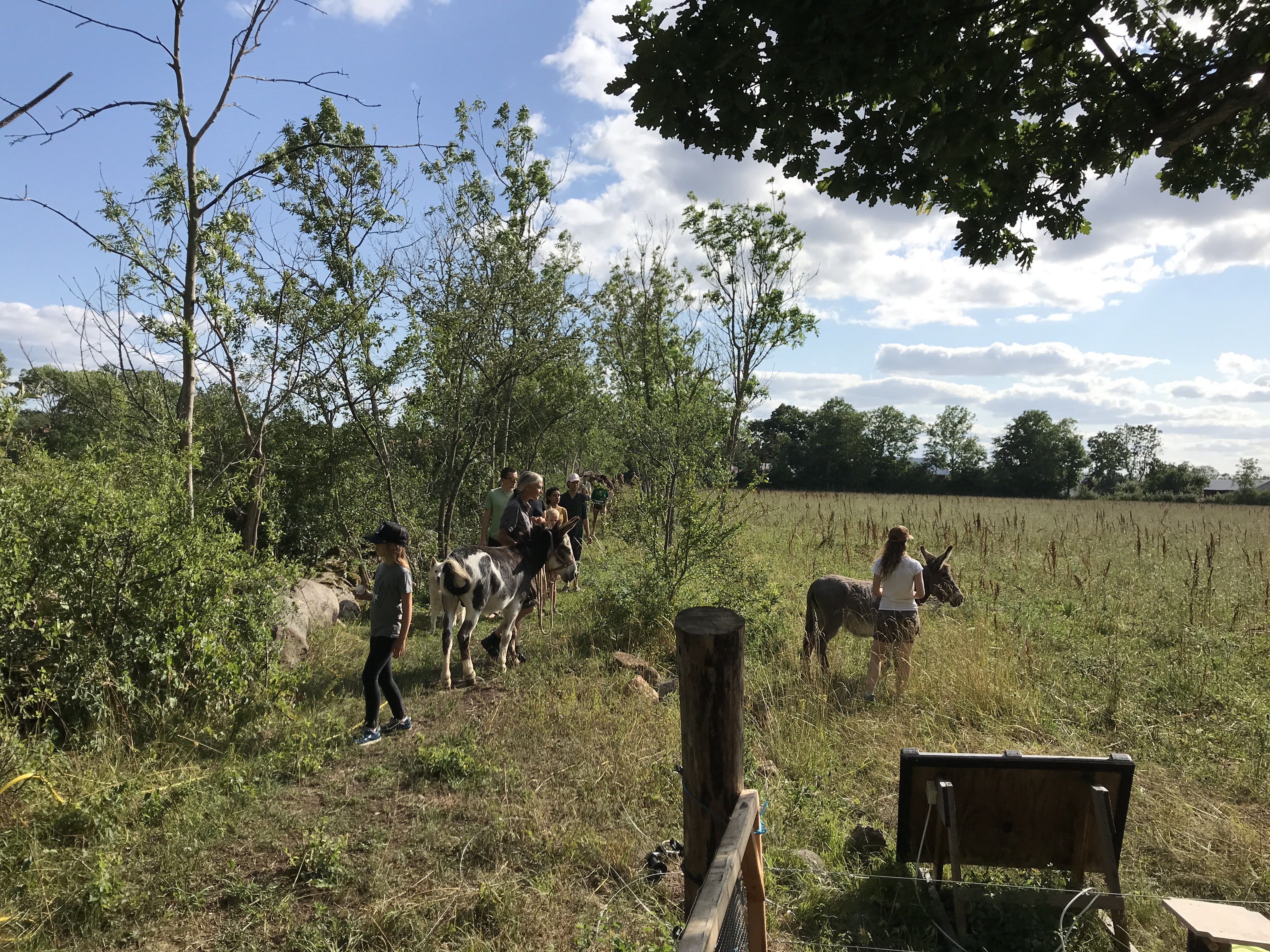
Kultivator’s new artistic research project, Tell the Field that she wants to be a Meadow, funded by the Swedish Research Council and hosted by the Royal Institute of Art, will use artistic processes to explore ways of thinking and acting for animal and plant self-determination (co-creation) within an existing farm geography. The work proposes a material-aesthetic dialogue with post-anthropocene theory and wants to reach and engage with the possibilities and challenges that living eating bodies, manure, soil, and inherited landscape present in that discourse. The surrounding/site/host is Öland’s Midland, a cultural heritage of nature types and species that have evolved together with human small-scale farming through millennia. Some parts of this mosaic are still spared of industrialised agriculture, and allow intricate ecosystems to be active. This landscape makes it possible for the project to utilize the historical experience of a continuous multi-species farming community, which still to some extent is alive.
The aim of the research is to think, act and imagine ways to foster our capacity to operate together with the many – domesticated, wild and in-betweens – that live on the field with us now, in a different way. Within the three years of this research project (2025–2027), Kultivator hopes to establish a new habitat, a farm of sorts, which suggests and imagines a new order inside our age-old agricultural landscape.
The research group is constituted by Malin Lindmark Vrijman (project leader), Mathieu Vrijman, Maria Lindmark and R.A.W./Karin Bolender.
Read more here: https://www.kultivator.org
Evaporation Day, with Yard Work at Living Studios
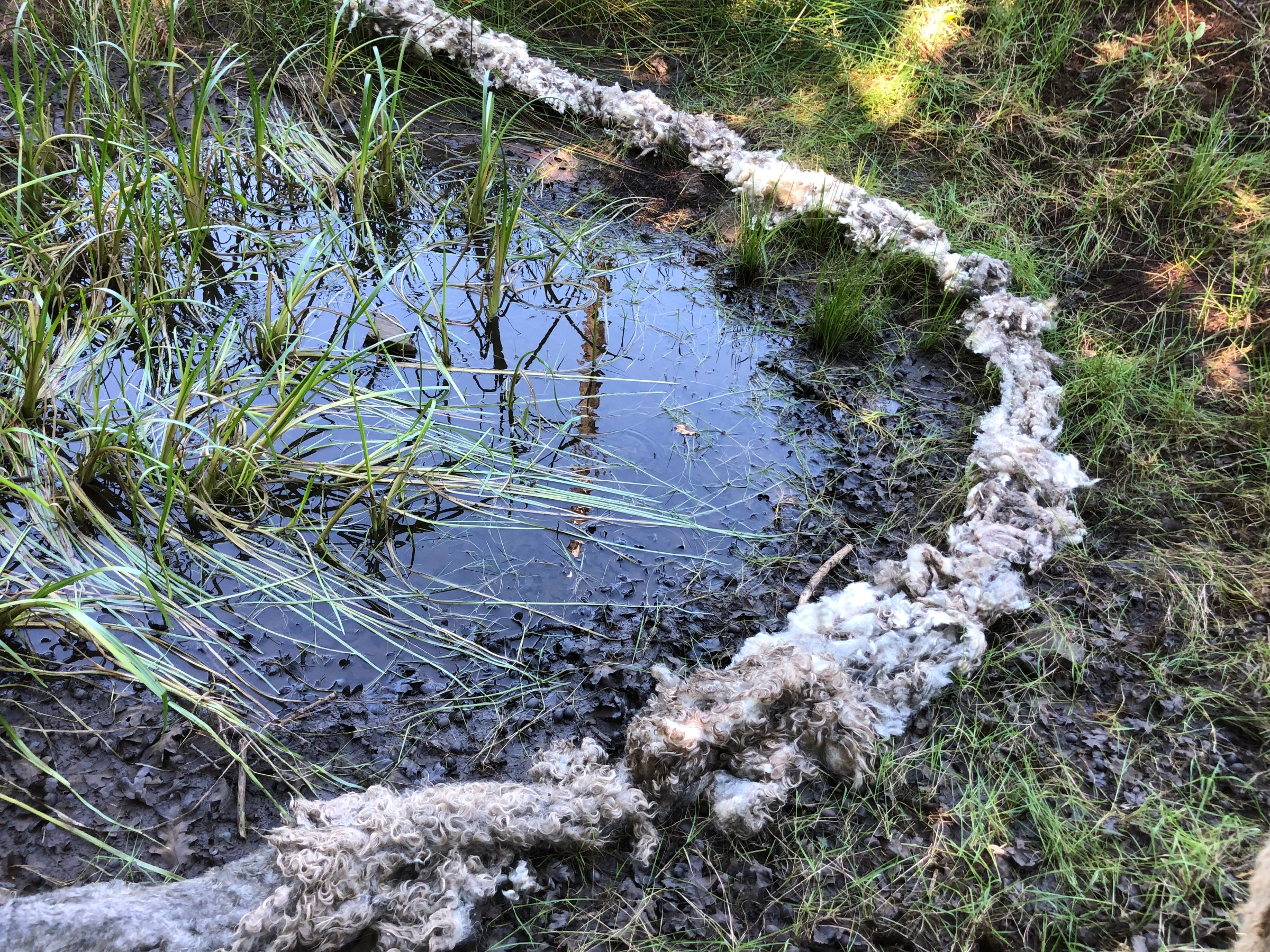
Evaporation Day is an installation/performance presented for Yard Work and Living Studios Gallery in Corvallis, OR, curated by Jill R. Baker.
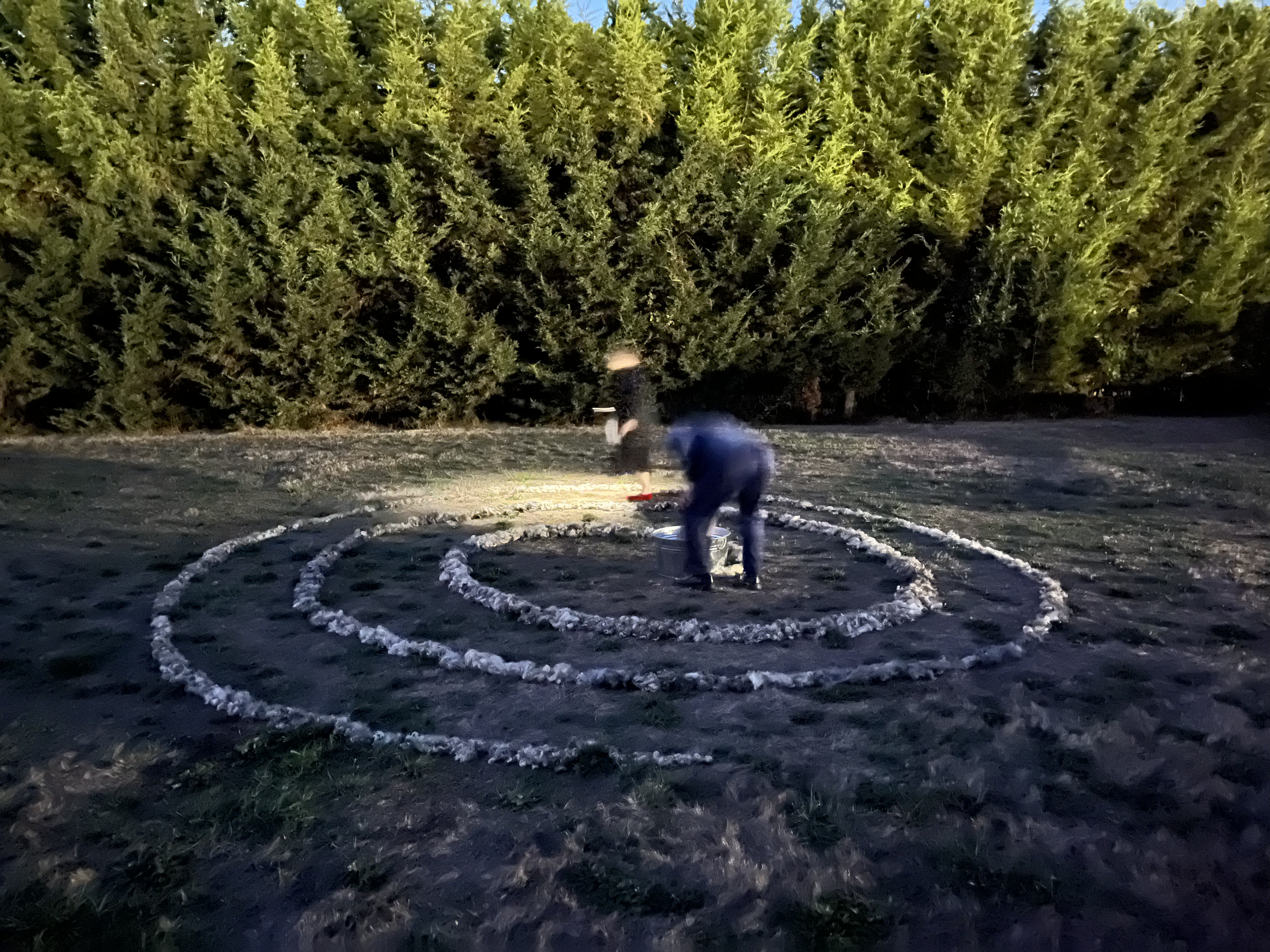
Evaporation Day, Yard Work at Living Studios. Installation of spiral made of raw wool from three sheep residing at the Rural Alchemy Workshop (Amitza, Marble, and Rocket). Evoking the rim around the last remaining water in the R.A.W. pond on Evaporation Day in early summer, this spiral of the same raw wool welcomes back the water from wherever it has been since it last passed through here.
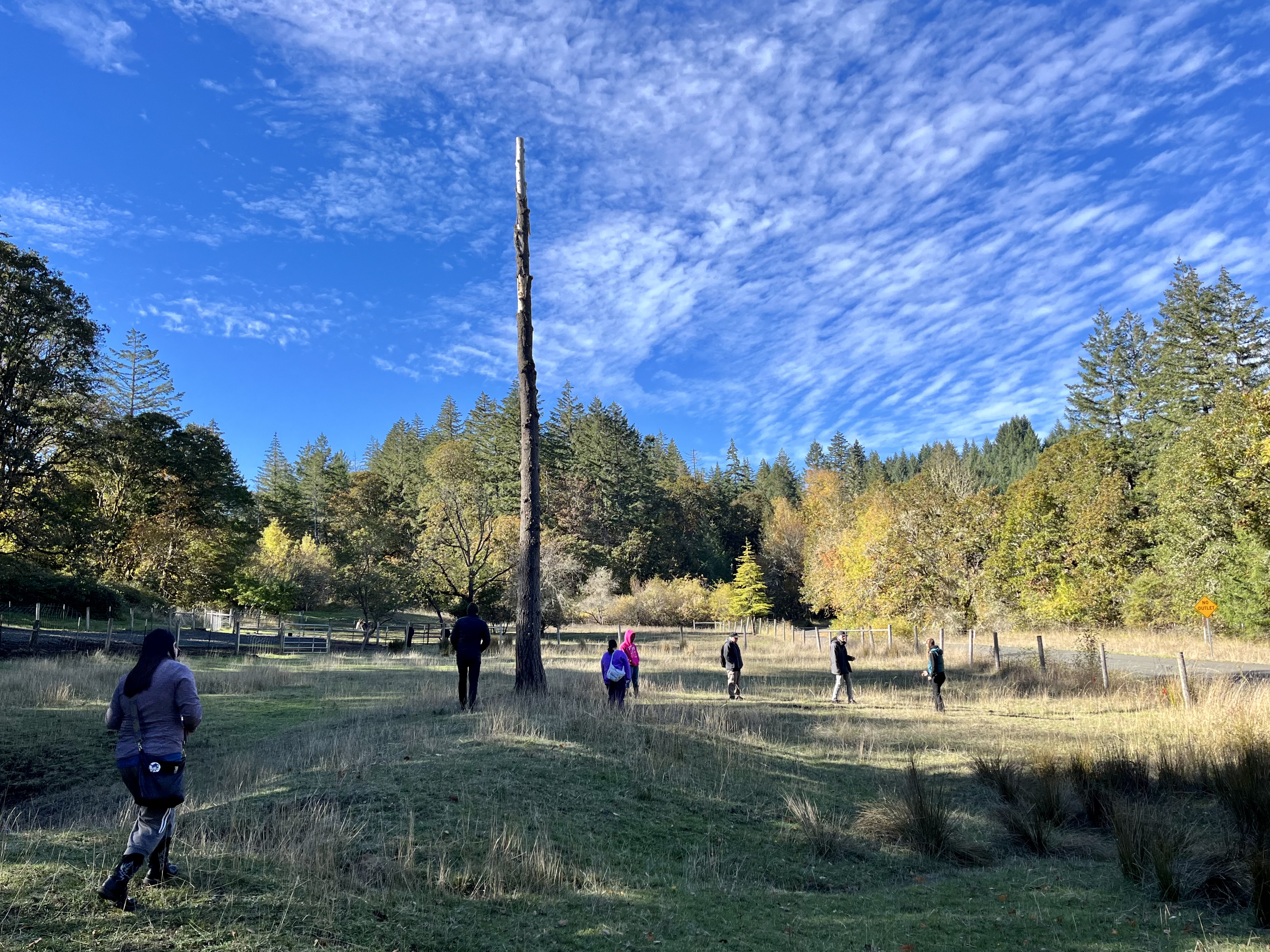
On October 24, 2024, the R.A.W. pasture studio welcomed artists from Living Studios for a visit as an extension of the Evaporation Day installation. Artists wandered in and around the pondbottom and watched and listened to the presences of the donkeys, sheep, and Ghost Tree in different ways.
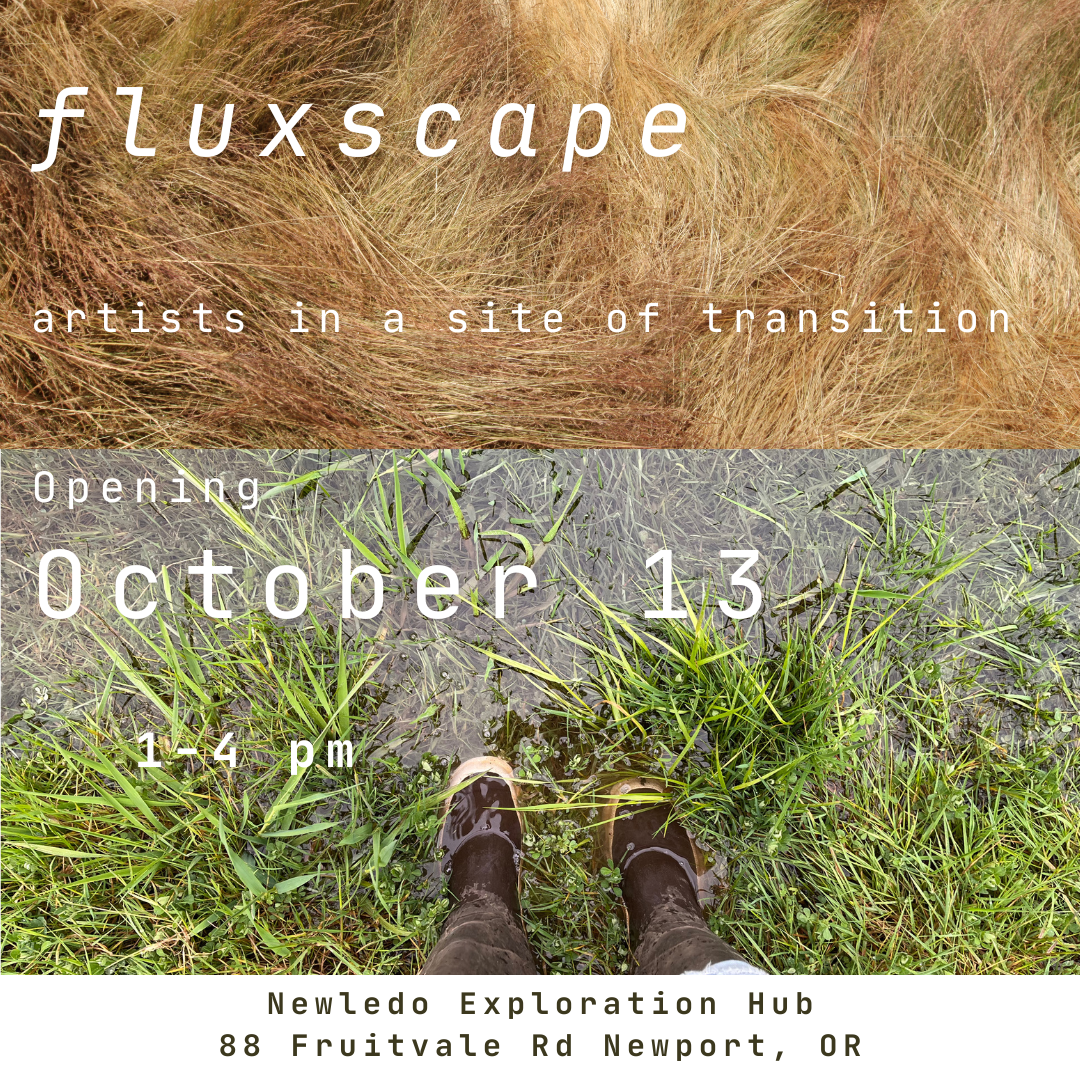
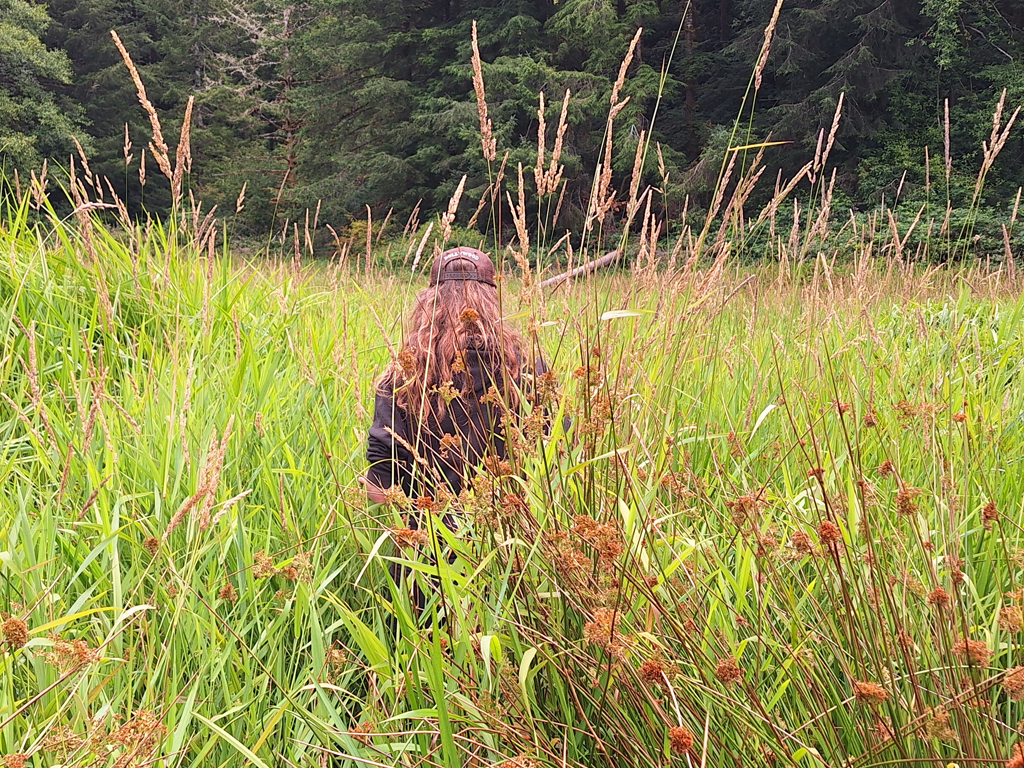
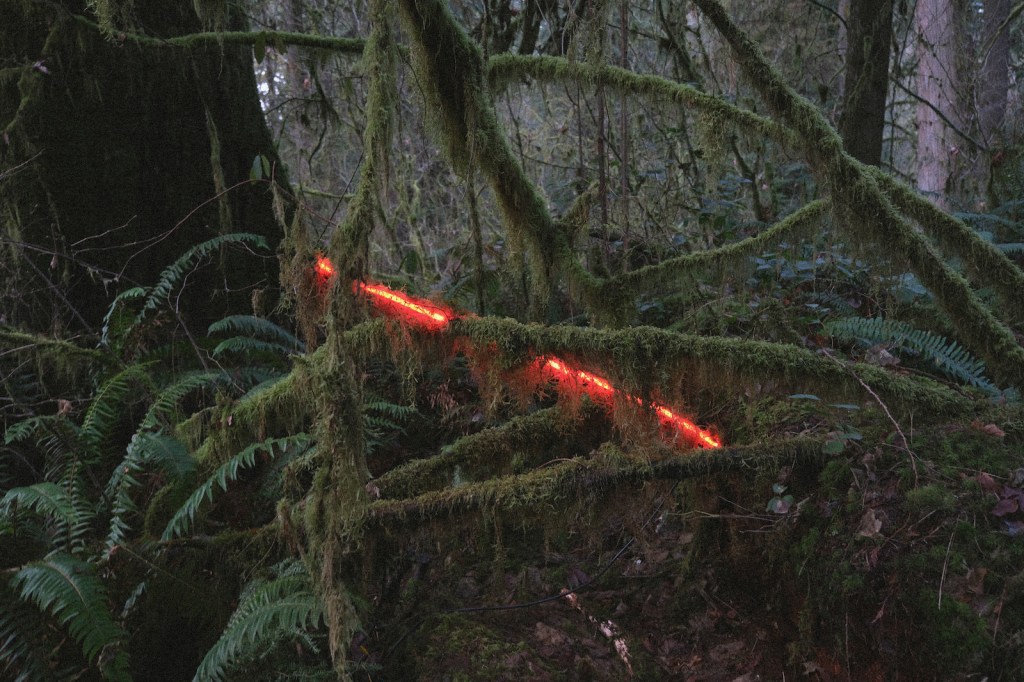
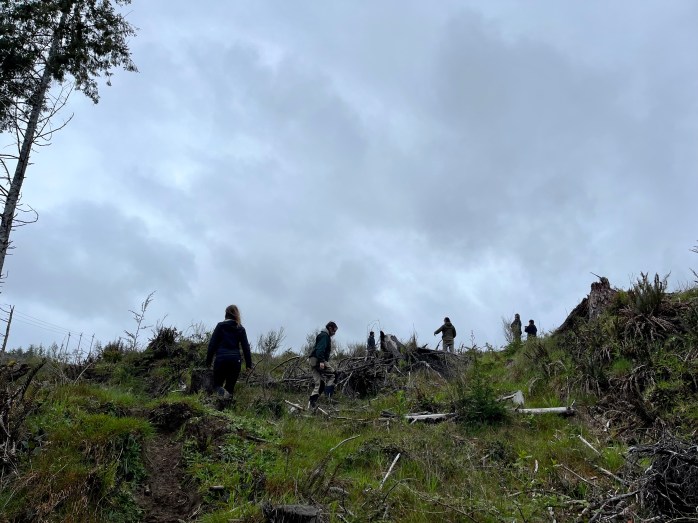
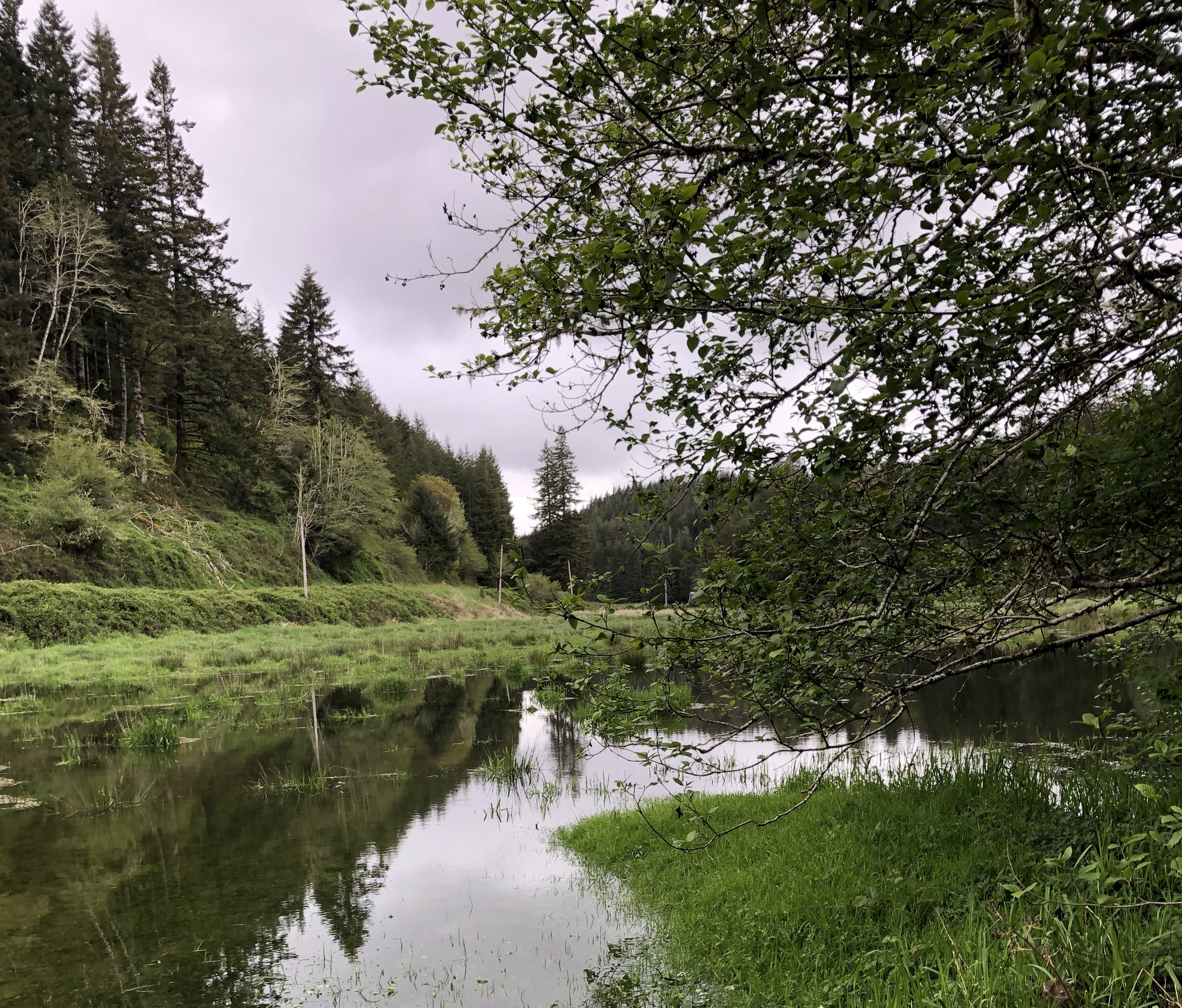
On October 13, from 1-4 pm, Newledo Exploration Hub in Newport, OR will host a public opening event for fluxscape, an innovative art exhibition that flows outside traditional indoor spaces and timeframes of artistic presentation and invites visitors to encounter contemporary artworks created in conversation with the dynamic forces and shifting ecologies of a unique coastal landscape-in-transition. The show will take place in and around Newledo’s former dairy barn and 10-acre pasture, which is slated for major restoration to improve salmon habitat over the next year. fluxscape features installations and performances by Pacific Northwest and international artists whose works engage visitors with hidden dimensions of this land’s pasts, presents, and futures.
Artists include Angelina Almukhametova, Jill R. Baker, Karin Bolender/R.A.W., Agnese Cebere, Nicole Cousino, Dann Disciglio, Malin Lindmark Vrijman, Jacob Mitas, and Moa Vrijman.
For more information, contact Nicole Cousino at nicole{at}newledohub.org and/or R.A.W. at rural.alchemy.worksho{at}gmail.com
Fuel Ladder: Holding Fire at Well Well in Portland, Oregon
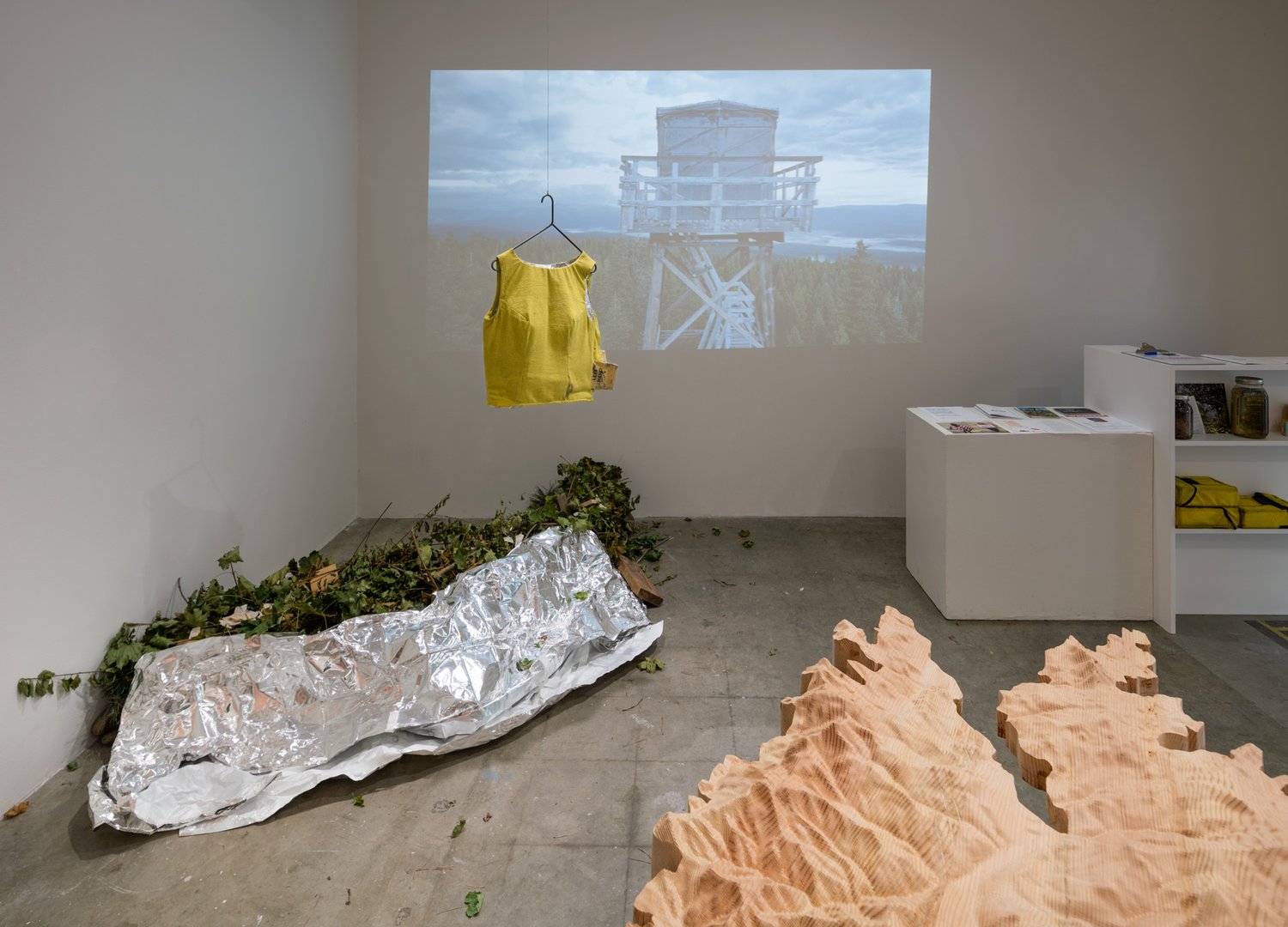
HOLDING FIRE
Fuel Ladder
September 2 – October 1, 2023
Well Well Projects, in association with Converge 45
Fuel Ladder is an interdisciplinary research collective of artists, designers, and thinkers in and around Eugene, Oregon, who are exploring climate crisis through the social and ecological complexities of wildfire. As a collective working at the intersections of contemporary art and climate, we cultivate collaboration through practice-based research, engaging on-the-ground experiences of climate crisis through the stories, metaphors, and materials of wildfire in the Pacific Northwest and beyond. Our collective cultivates a dispersed network of nodes for exchange based in conversation, correspondence, and creation of objects and experiences. We seek to invite diverse participants and communities into regional explorations of wildfire and its cycles of both destruction and renewal.
Karin Bolender’s Rural Alchemy Workshop (R.A.W.) foregrounds ‘untold’ stories and experimental anarchives within meshes of mammals, plants, and microbes. William Bonner’s hybrid practice investigates the intersection of design, ecology, and technology, utilizing installation pieces to highlight and communicate the importance and beauty of living processes. David Buckley Borden’s place-based projects use humorous combinations of visual art and landscape design to center environmental issues within everyday phenomena. Brian Gillis engages site-specific histories and partnerships, intentionally blurring lines between artist, designer, educator, community organizer, and anonymous steward. Colin Ives positions his practice as a speculative research-based endeavor, positing that our digital tools are changing not only our capabilities, but also our worldview. Emily Eliza Scott is a leading scholar, educator and former park ranger focused on art that addresses the climate crisis and seeks to actively transform real-world conditions. Nancy Silvers explores identity and ecology at scales that range from a single thread to acres of landscape through her work with textiles, wood, paint, and plants. Sasha Michelle White’s practice centers fire-adapted plants as a way of understanding the material, social and ecological relationships of Oregon’s fire-prone landscapes.
Fuel Ladder received support and funding from The Universities of Oregon’s Center for Art Research, The Ford Family Foundation, and Converge 45.
ANTI-FUTURE HOME/SITE of the PARADISE POSTLIBRARY
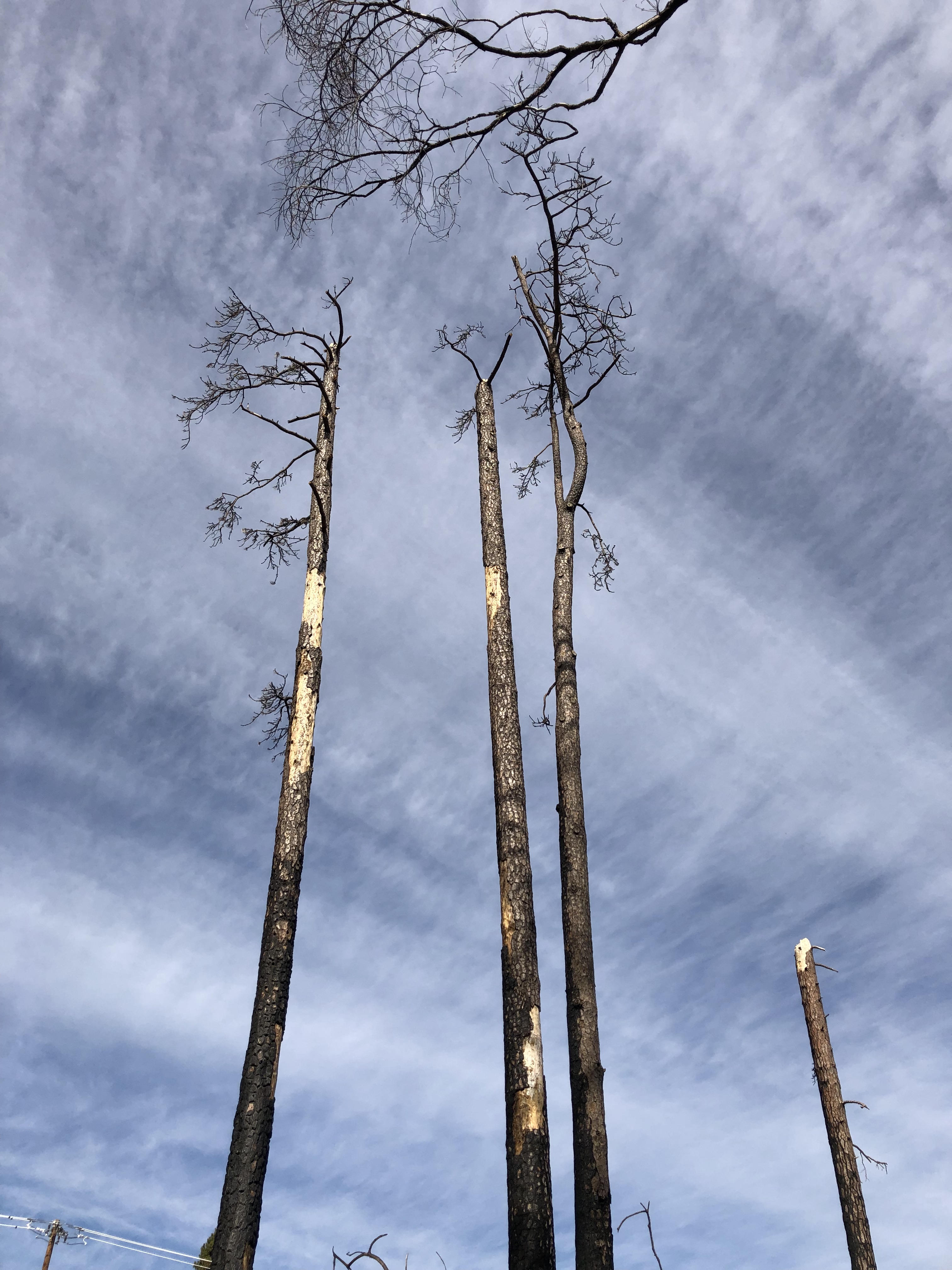
In association with the R.A.W. PostLibrary, opening since 2020, and other anarchival PostLibrary nodes for speculative friction in places past and yet-to-come. Also in association and collaboration with Fuel Ladder and appreciating support from the UO Center for Art Research and the Ford Family Foundation.
Coming soon! Newest branch of R.A.W. PostLibrary to open in Paradise
This sign marks space claimed as a Staging Area for Phase 2 of Paradise PostLibrary construction. This project requires land, a great deal of land. All the land you stand on, and then some. The back forty first, then all the other back forties of whatever size they happen to be, whatever lives they make possible. Imminent domain.
This area will be used for staging and temporary storage of building materials and equipment* for Phase 2. A Necessary Tunnel. And then some.
Pardon our dust! (And try not to breathe it.) Advancing impact is a goal we must all rally behind.
Every effort is being made to ensure associated activities will be maintained during the Construction Project.
Every effort will be made to assure that this Construction will (not) disrupt the advancing impact of the future being built upon this
soil.
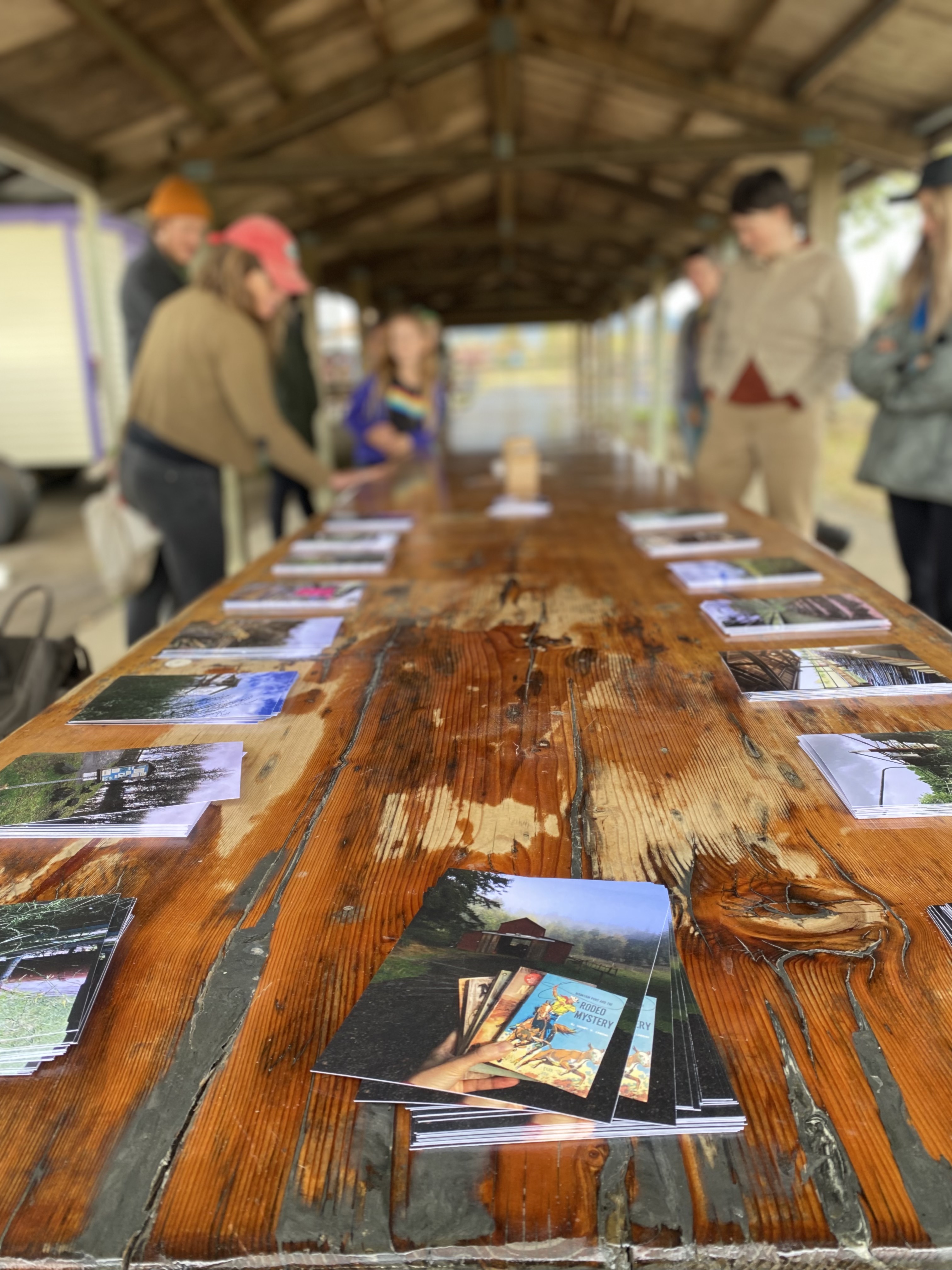
Pulping Rodeo Mystery: a workshop
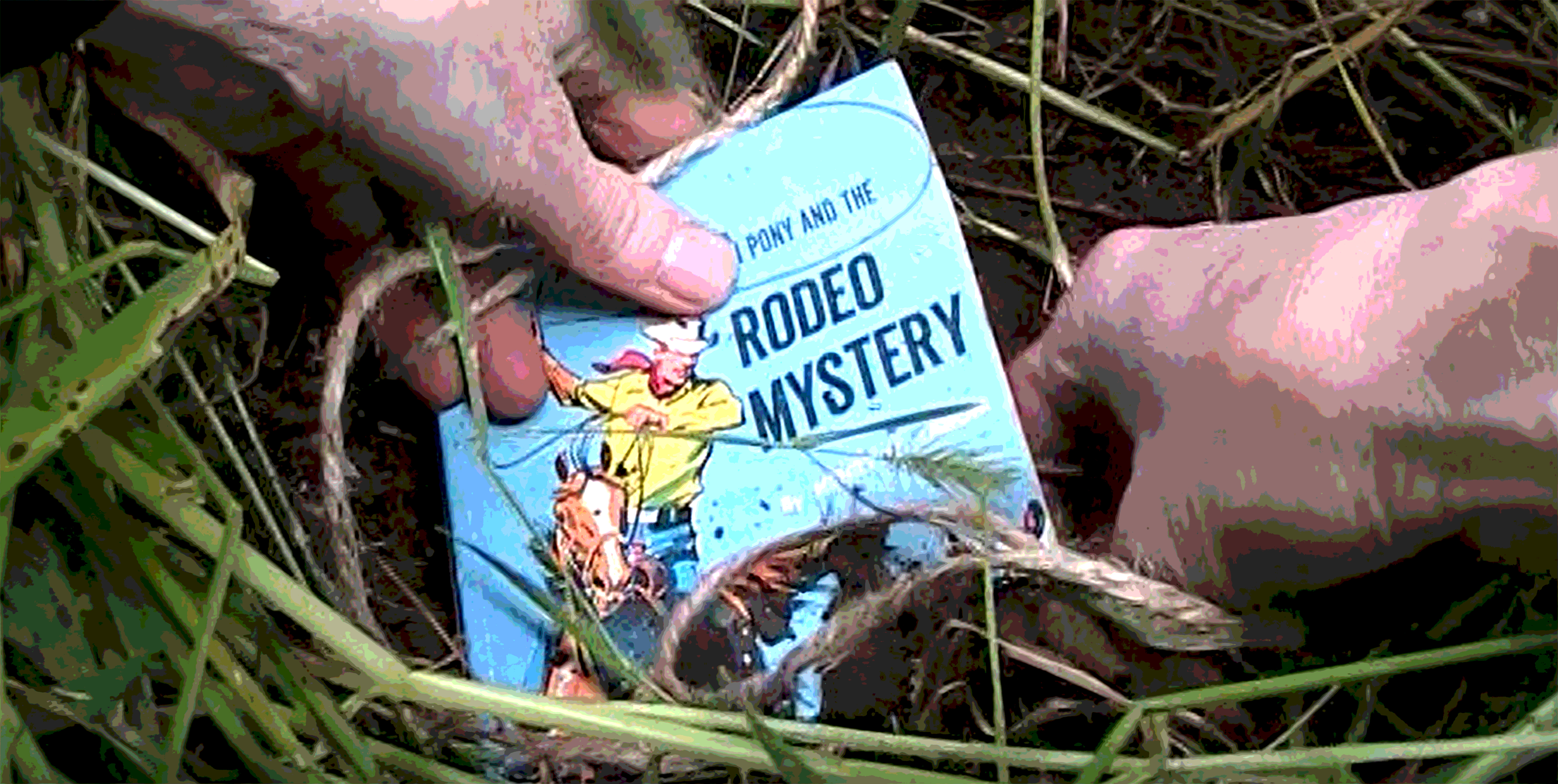
It’s pulping time! Come join the R.A.W. posse in Philomath for PULPING RODEO MYSTERY . . .
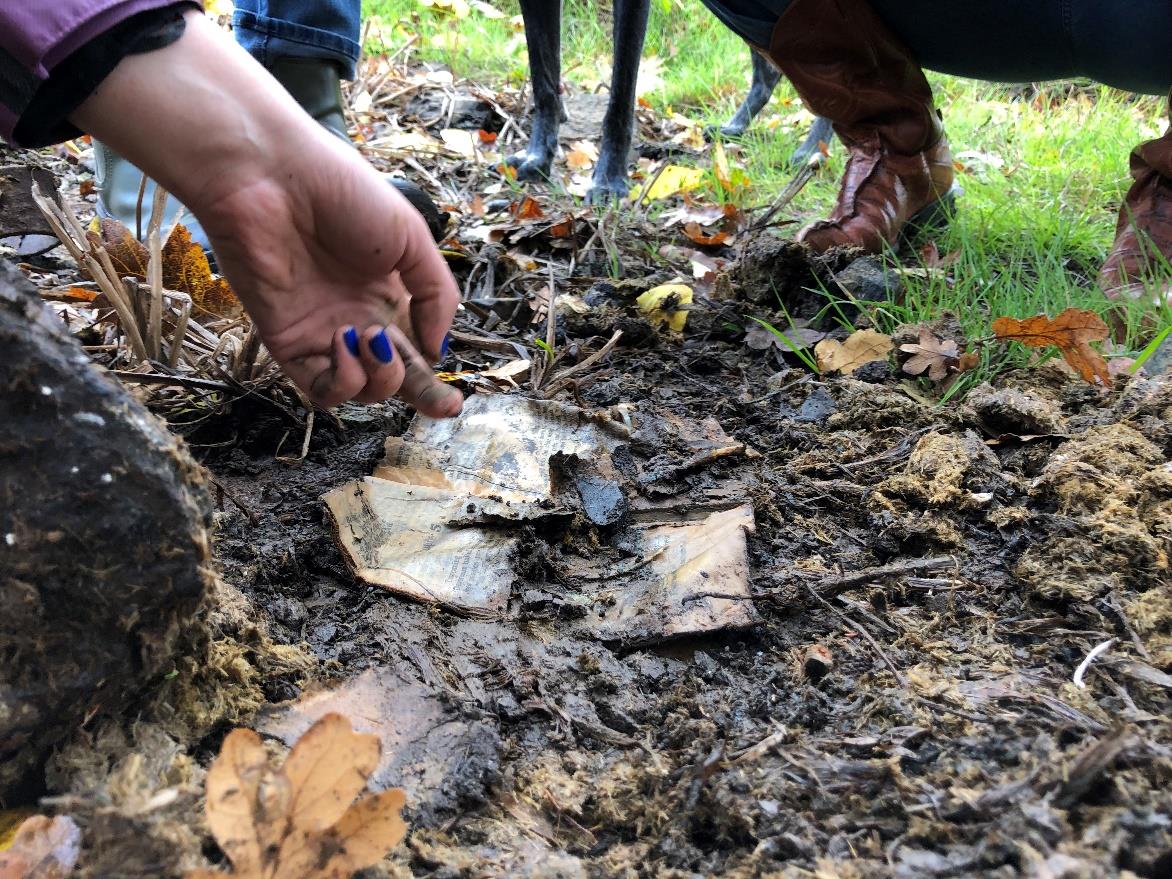
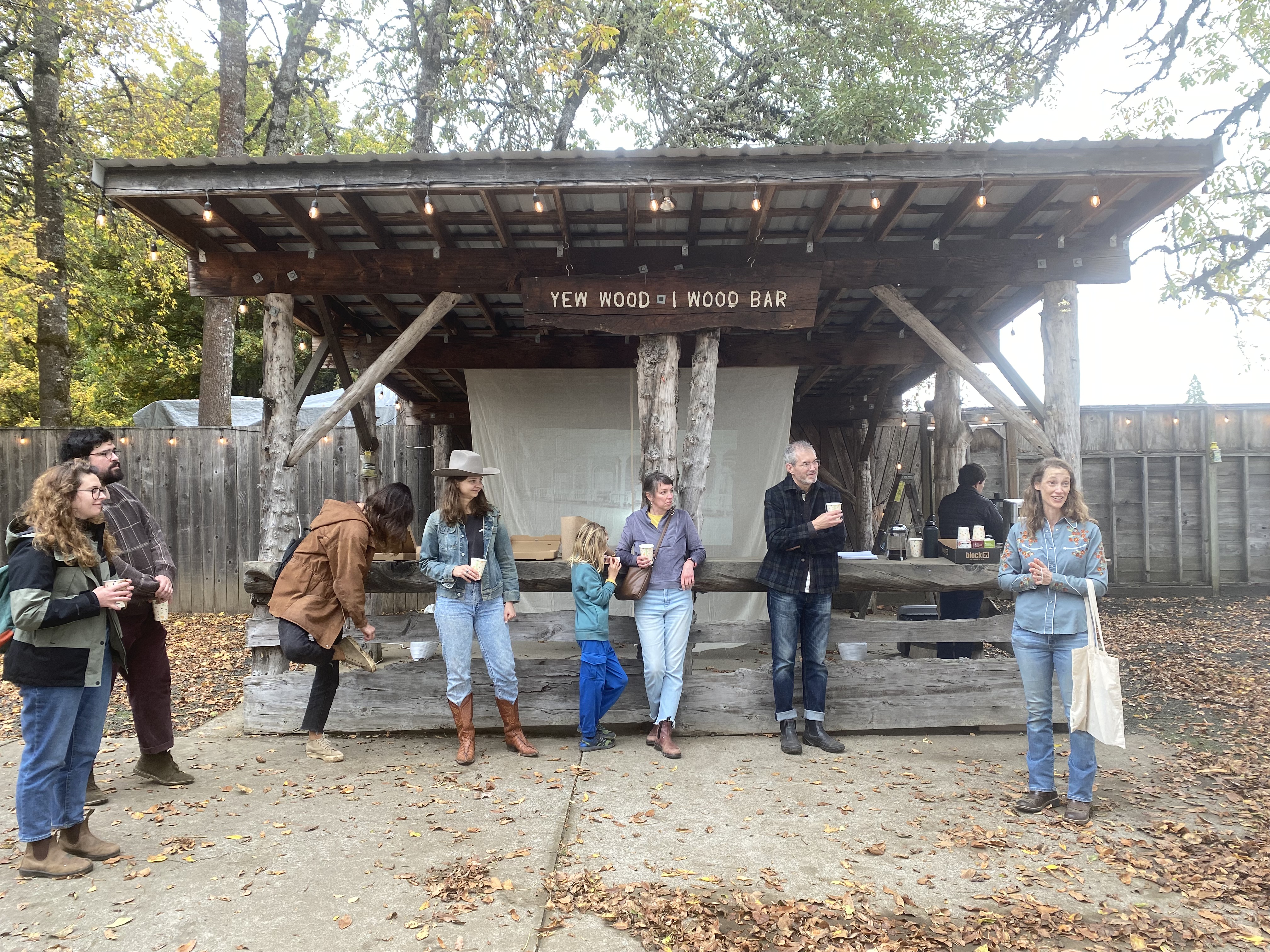
On Sunday, October 30, the R.A.W held a public pulping workshop at the Philomath Frolic & Rodeo Grounds in Philomath, Oregon. “Pulping” is an evolving process that experiments with locally-sourced materials and methods—alongside some wilder propositions—for making newfangled, off-the-grid stories with untold others in places we inhabit together.
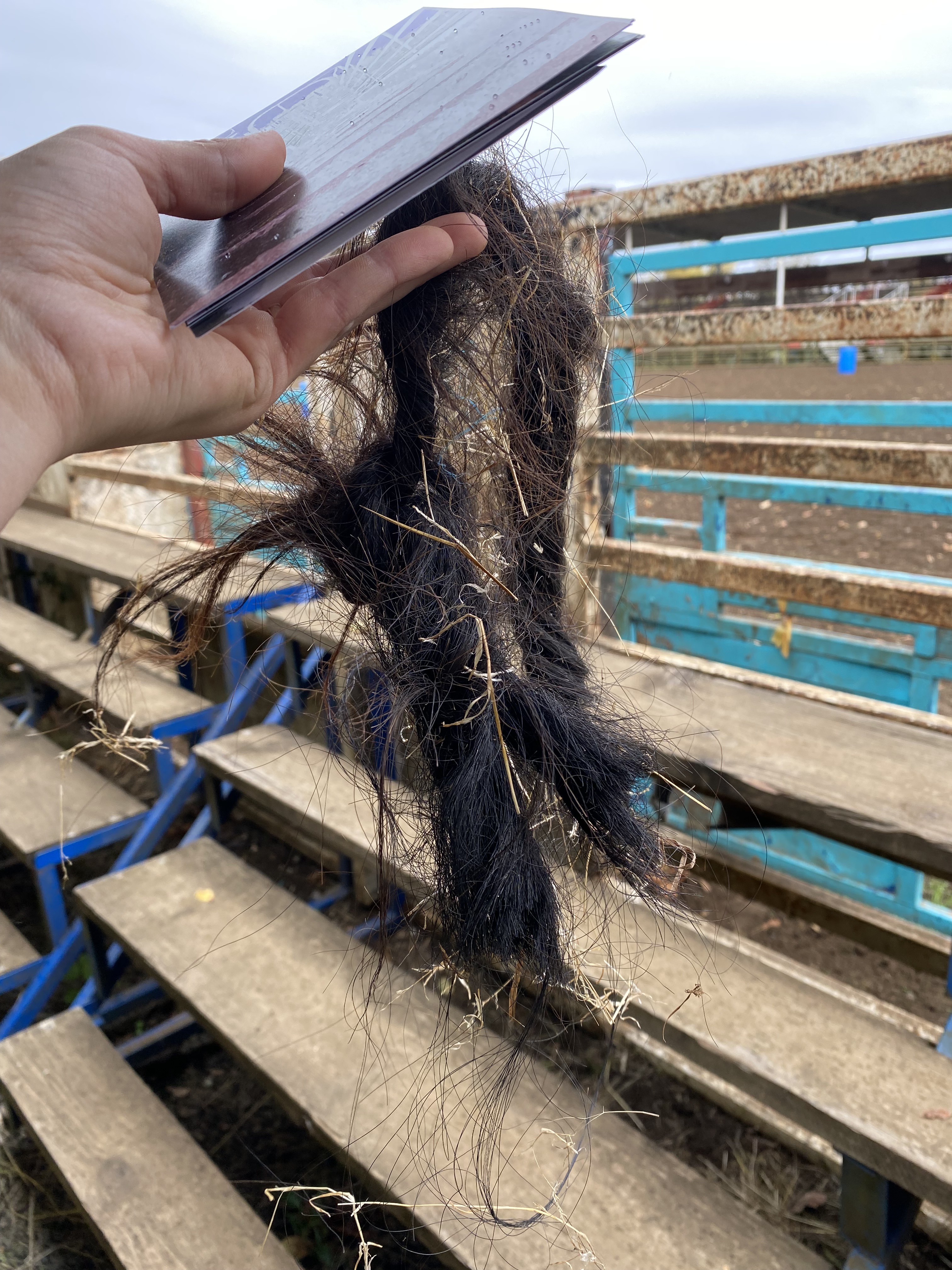
As the home of the annual, award-winning Philomath Frolic & Rodeo since 1953, these Rodeo Grounds offer a deep and richly cultured space in which to encounter both the historic visible structures and the more hidden flows of time, weathers, and peripheral lives that animate this central place within a rural Oregon timber town.
The Pulping Rodeo Mystery workshop brought together a posse to encounter and search deep into the structures and secret flows of the Rodeo Grounds, both in and beyond the boards of the arena. This event also included an invitation to visit to the R.A.W. Pasture later that afternoon.
This event was sponsored by the University of Oregon’s Center for Environmental Futures and the Pacific Northwest Just Futures Institute through a generous grant from the Mellon Foundation.
Let ‘er pulp!
The R.A.W. PostLibrary Generator is on.

Developed through a 2021-2022 CFAR Project Incubator fellowship with the University of Oregon’s Center for Art Research and Knight Campus for Accelerating Scientific Impact, the R.A.W. PostLibrary Generator (PLG) is a site-specific system that powers the PostLibrary in new ways, engaging with compost methods and seasonal creekflow. Designed to hold hot R.A.W. manure compost in contact with a local flow of cold water, the PLG system generates a small amount of voltage through a special thermoelectric compost-generator device created with UO Technical Sciences Administration and Knight Campus engineers Geordi Helmick and Clifford Dax. For more details and updates, stay tuned to the R.A.W. PostLibrary. . . .
Call for proposals: The Haunted Pond (a Secretome score)
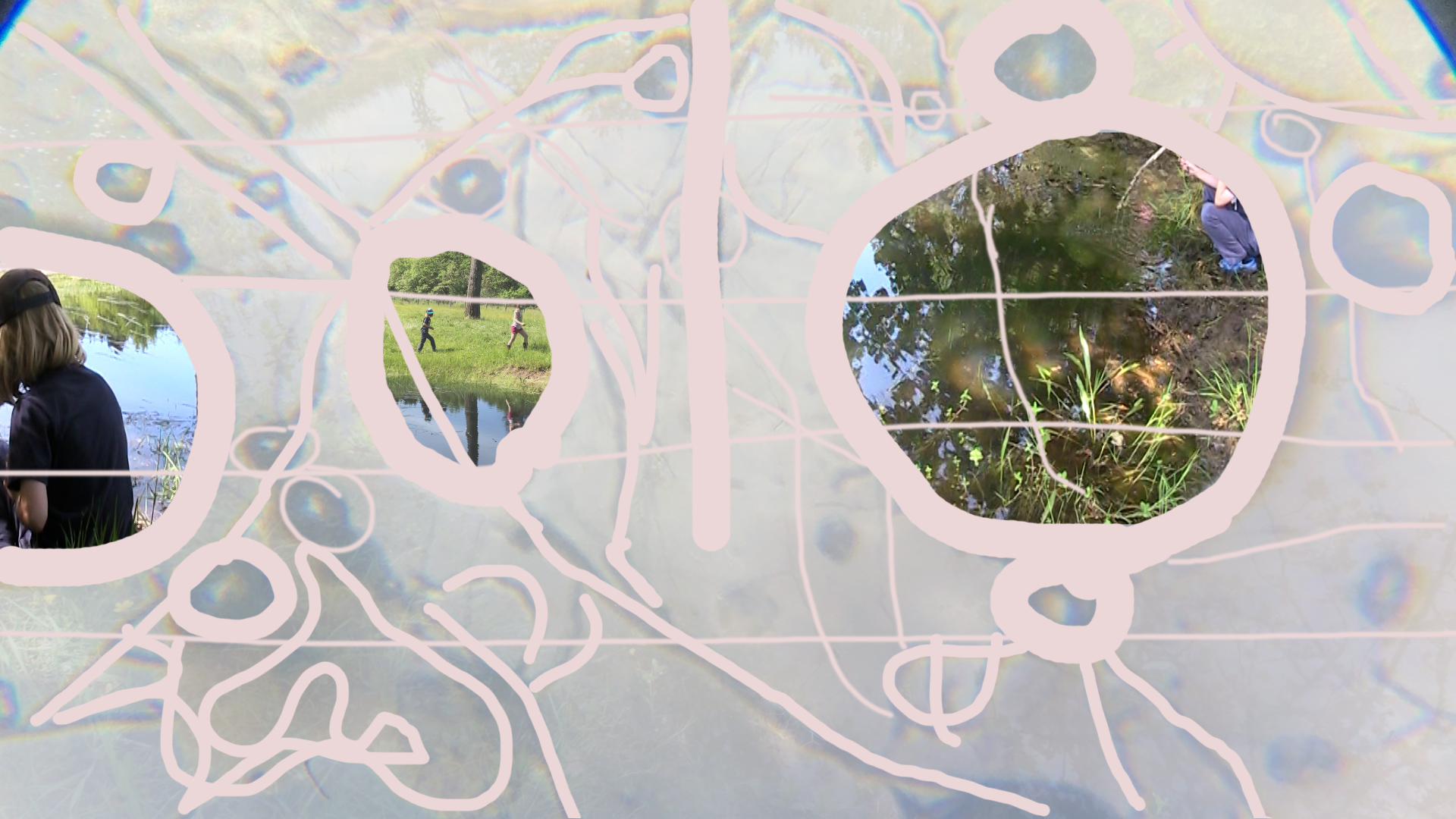
The Haunted Pond (A Secretome Score) is an experimental score set in a video that gathers from a two-year, multi-seasonal performance and intergenerational collaboration located in a small pasture at the Rural Alchemy Workshop (R.A.W.) in Philomath, Oregon. In the midst of uncertain times and terrains, these playful encounters become the structure for graphic scores and durational performances, grounded in lived experiences of time and change within places we care for.
To further expand this ongoing collaboration, which began in May 2020, artists Jill R. Baker and R.A.W./Karin Bolender invite sonic responses and/or interdisciplinary proposals for time-based performances responding any elements of written and graphic scores contained in the video The Haunted Pond (A Secretome Score), created by Jill R. Baker. See full call for proposals below for more details.
Jill R. Baker and the Rural Alchemy Workshop (R.A.W.) invite proposals for engagement of an experimental score called The Haunted Pond (A Secretome Score), drawing from an ongoing intergenerational collaboration begun in spring 2020 in a small pasture at the R.A.W. in Philomath, Oregon.
The making of the Haunted Pond score began on May 5, 2020, when the team of artist Jill R. Baker and Fox (then age 6) performed a first creative encounter within the wildly green R.A.W. pasture. The Haunted Pond score draws on a Secretome “mapping” technique developed by the R.A.W. as an experimental method for co-composing stories with/in hidden ecological energies. The basic choreography invites participants to explore ecologies of specific places in new ways, through images of microscopic microbial cultures gathered within them. These images become both portals and “maps” that lead into deeper connection with places’ hidden layers. On this first May encounter, the R.A.W. PostLibrary at the edge of the pasture presented Jill and Fox with basic Secretome culturing tools (petri dishes, swab sticks, and an older Secretome pasture “map” made from the muzzle microbiome of one of its grazers). With these tools in hand, they entered the pasture and wandered amidst its more visible landmarks and hidden flows and presences. Allowing Fox’s playful exploration to generate instructions for a sequence of actions, Jill created a written score. The R.A.W. crew processed the cultures of the day into Secretome maps, which the kids were then invited to use as they might in the dry pasture and empty pond in the fall 2020 and beyond.
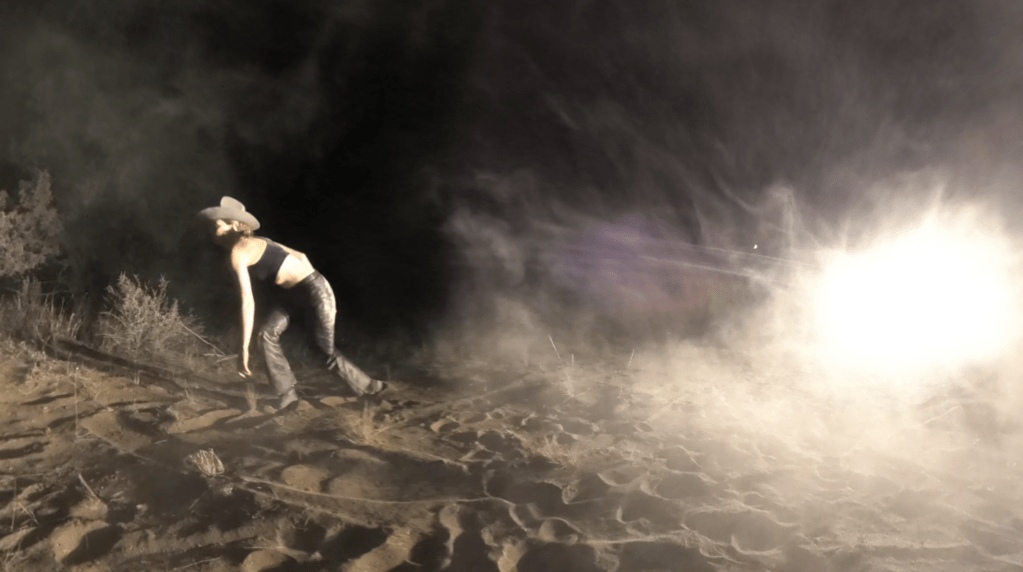
Created through playful encounters and sustained attention in the midst of uncertain times, The Haunted Pond (A Secretome Score) grounds in lived experiences of time and change in specific places. Over two years of changing seasons, we’ve continued to engage the written score, Secretome maps, and various modes of improvisation together in the R.A.W. pasture in different ways. The small manmade pond, which swells and then evaporates seasonally, is a source of special attention and attraction. Around the pond’s ever-changing edges and reflective surfaces, the work has continued to grow and evolve through unpredictable events and time-flows—smoke and fog, mud and cracked earth and ashes. The video made by Jill gathers from different occasions over springs, summers, falls, and winters, drawing on lines and flows made by local microbial cultures and the traces of children playing across rising and falling waters and moving shadows.
Within the reflections of time and shifting horizons of place at play in this project, we would like to invite others to take part in engaging this multi-year score. We invite proposals for experimental time-based performances (including but not limited to music, sound, dance, writing, visual art . . .), drawing on, responding to, or expanding any element of the written and/or graphic score–into other significant ecologies, durations, and sustained encounters. Intergenerational teams are encouraged. Please send questions and proposals in .pdf form to ruralalchemyworkshop@gmail.com
Get ready for an awesome display of R.A.W. power . . .
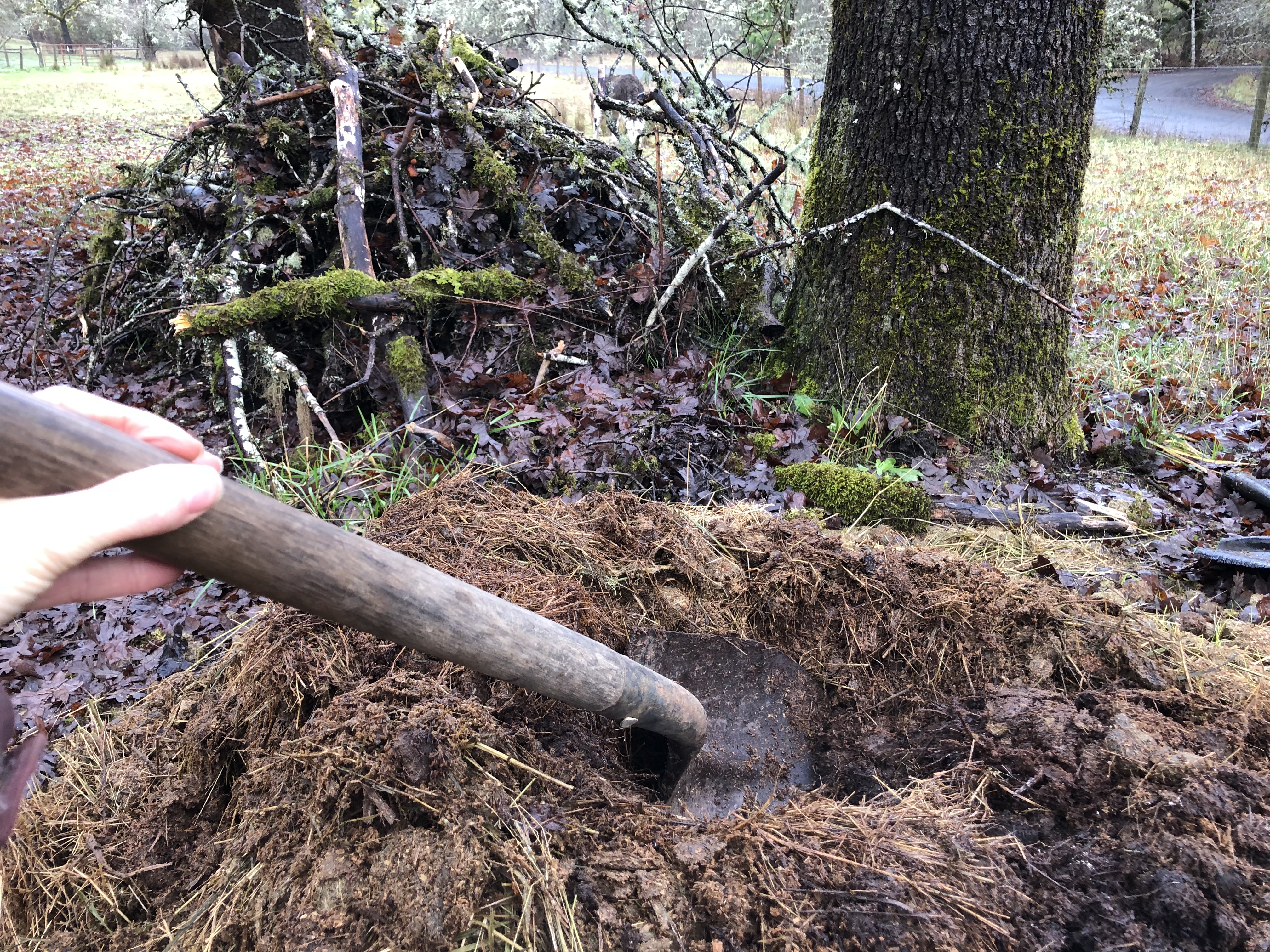
In November of 2021, the R.A.W. enjoyed a residency as the first fellow of the University of Oregon’s Center for Art Research/Knight Campus Project Incubator program. This residency took place inside the sparkling new Phil and Penny Knight Campus for Accelerating Scientific Impact, located on the banks of the old Millrace waterway across from the Urban Farm and the Millrace studio complex in Eugene. This program offers Oregon artists the opportunity to connect with the cutting-edge technical-scientific resources available at the Knight Campus, alongside artistic and scholarly nodes in the broader UO community.
This CFAR Project Incubator (CPI) presents compelling new directions for the R.A.W., which has always been grounded in messy, mostly DIY modes and methods. For the initial proposal, I put forth the idea of engaging Knight Campus expertise and resources to engineer a system to provide solar power for the R.A.W. PostLibrary, perhaps to run a video display (I was vaguely thinking of screening videos at night for passing wildlife, inspired by the neighbors’ trail-cam images of bobcats, mountain lions, and black bear, to name a few). But then a conversation with CFAR director Brian Gillis raised the specter of alternative-alternative power: what might some options be beyond solar? In considering this question – perhaps even while mucking out Aliass’s stall, where I tend to do my best thinking – the ultimate source of R.A.W. power presented itself as the perfect answer: the R.A.W. PostLibrary must be powered by manure compost.
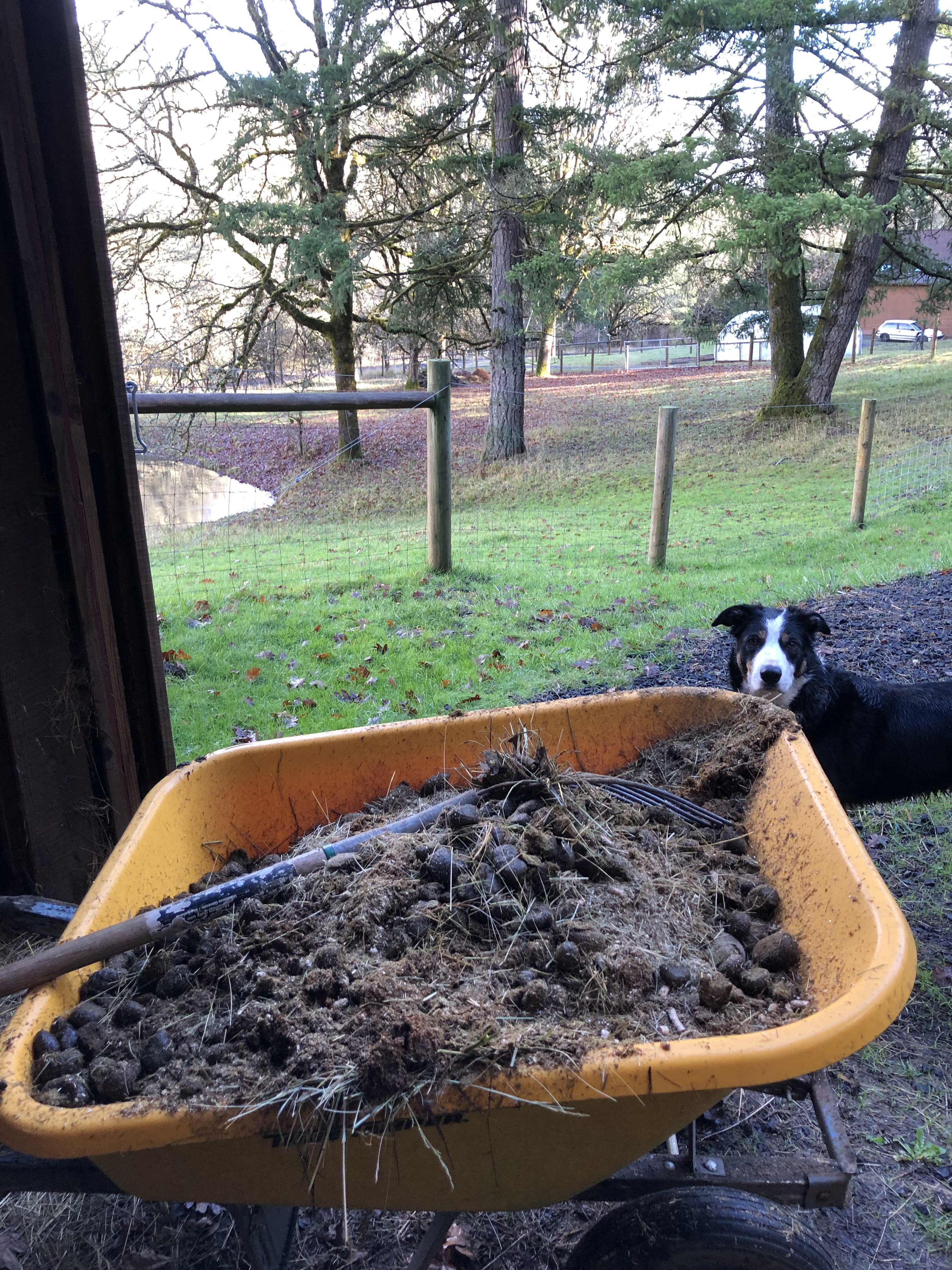
So began an ongoing quest to transform the hot microbial processes of manure composting into a modest source of power for the R.A.W. PostLibrary. With technical and material support from the brilliant engineers in the UO Technical Sciences Administration and Knight Campus (Geordi Helmick, Jeffrey Garman, and Clifford Dax), engineering and fabrication are underway for an experimental compost-power system using thermoelectric-generating (TEG) components that *might* eventually generate a small amount of voltage through temperature differential between hot ass compost and cold flowing water from the R.A.W. pulping pond. I say “might” because many aspects of this system have yet to be determined–first and foremost being the question of whether I can get the R.A.W. compost hot enough to make a difference.
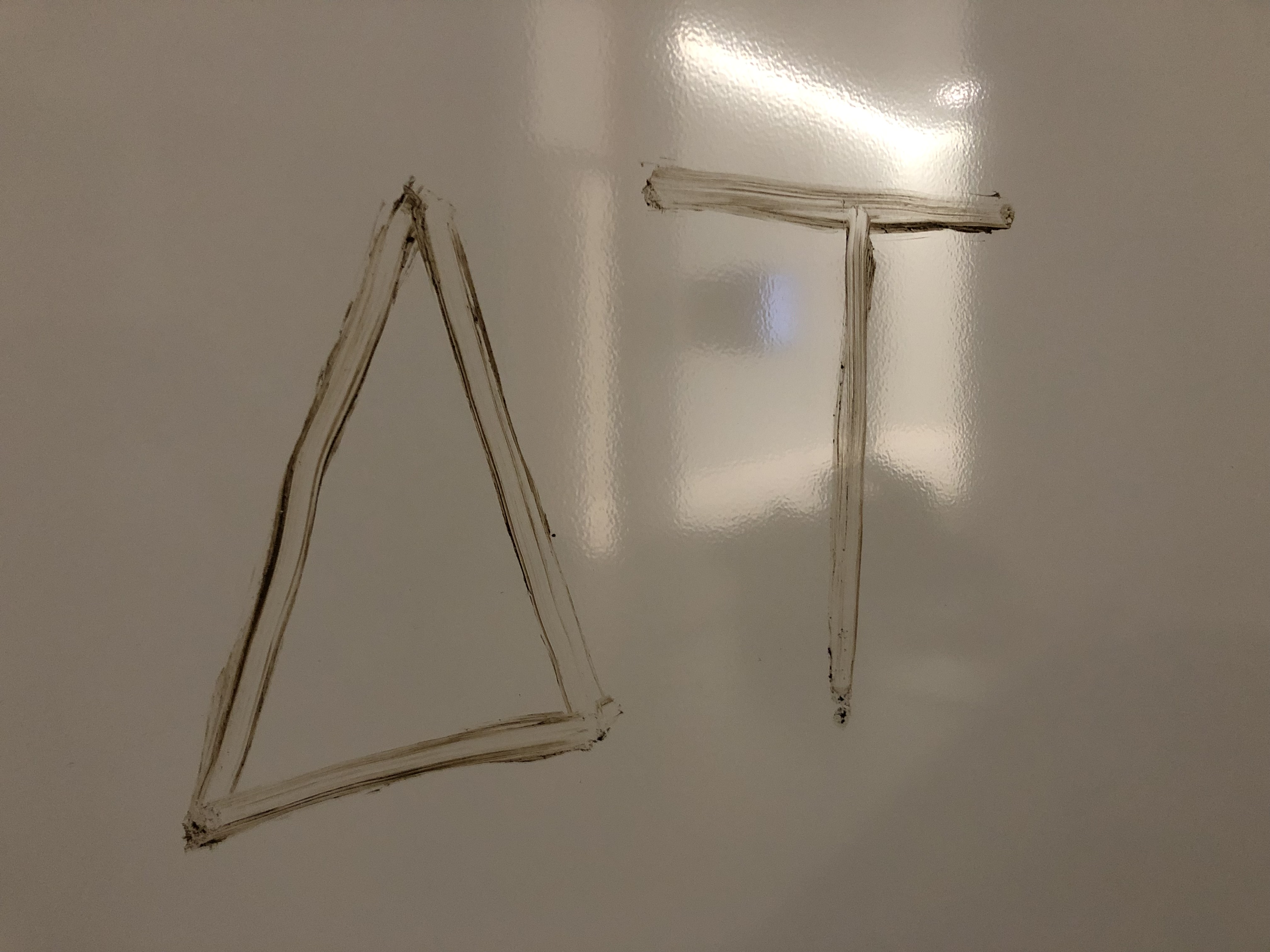
Many other technical and conceptual questions have yet to find solutions in this developing R.A.W. compost-power system. One of which is: assuming this system can generate and harness significant voltage (likely we’re talking between 3>5v, a big assumption at this stage), in what ways will the PostLibrary put that power to work?
This question has many rich possibilities for the R.A.W. PostLibrary. Needless to say, given the tendencies of R.A.W. processes to be slow as mud, it is one that we are more than happy to quietly ruminate on for some time to come. But stay tuned, because when and if this voltage does flow, you just might be privy to (cue up MonsterTruck Rally announcer’s voice) an awesome display of R.A.W. power . . . .
Berlin Art LInk interview
Excited here about a recent feature by William Kherbek on The Unnaming of Aliass in Berlin Art Link: The Bioerotic Universe: An Interview with Karin Bolender.
 Rural Alchemy Workshop (R.A.W.)